Table of Contents
- Key Takeaways
- Quick Verdict
- Product Overview & Specifications
- Real-World Performance & Feature Analysis
- Design & Build Quality
- Performance in Real Use
- Ease of Use
- Durability & Reliability
- Pros & Cons
- Comparison & Alternatives
- Cheaper Alternative: Avantree HT5009
- Premium Alternative: Sennheiser RS 195 vs. Bose TV Speaker
- Buying Guide / Who Should Buy
- Best for Beginners
- Best for Professionals
- Not Recommended For
- FAQ
Struggling to hear dialogue clearly while watching TV? Tired of constantly adjusting the volume between explosions and whispers? Or maybe you need to enjoy your entertainment without disturbing others in the house? These are the exact problems that brought me to test the Sennheiser RS 195 wireless headphones—a premium solution that promises to solve these common audio frustrations with German engineering precision.
After weeks of real-world testing in different home environments, I’ve discovered where these headphones truly shine and where they might disappoint. The RS 195 isn’t just another pair of headphones; it’s a complete wireless audio system designed specifically for TV and home entertainment. But with a price tag approaching $300, the critical question is whether they deliver enough value to justify the investment.
Key Takeaways
- The hearing enhancement modes are genuinely useful for making dialogue clearer without making everything else uncomfortably loud
- 100-meter wireless range works as advertised—I could move throughout my entire house without audio dropouts
- Battery life exceeds 18 hours in real use, making them perfect for binge-watching sessions
- The optical connection provides noticeably cleaner audio compared to standard 3.5mm analog
- Comfort is exceptional for long listening sessions, but the design feels bulkier than modern alternatives
Quick Verdict
Best for: Users with mild hearing challenges who want premium audio quality and reliable whole-home coverage. Perfect for late-night TV watching or situations where you need clear dialogue without disturbing others.
Not ideal for: Gamers needing low latency, people who want modern features like Bluetooth connectivity, or those on a tight budget.
Core strengths: Exceptional audio clarity for speech, impressive wireless range, comfortable for extended wear, and reliable performance.
Core weaknesses: Bulky design compared to modern alternatives, no Bluetooth connectivity, premium price point, and the charging dock takes up significant space.
Product Overview & Specifications
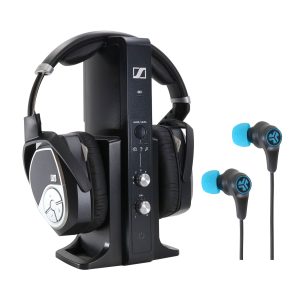
The Sennheiser RS 195 is a digital RF (radio frequency) wireless headphone system specifically engineered for home entertainment. Unlike Bluetooth headphones that can suffer from latency and range issues, this system uses a dedicated 2.4GHz wireless connection that provides stable, high-quality audio transmission throughout your home.
What sets the RS 195 apart from cheaper alternatives are the hearing enhancement features. These aren’t just simple EQ presets—they’re carefully tuned audio profiles that boost specific frequencies to make dialogue clearer while maintaining balanced overall sound. The system includes a transmitter that doubles as a charging dock, ensuring your headphones are always ready when you need them.
| Specification | Details |
|---|---|
| Connection Type | Digital RF (2.4GHz) |
| Input Options | Optical, 3.5mm analog |
| Wireless Range | Up to 100 meters |
| Battery Life | Up to 18 hours |
| Charging Time | 3 hours for full charge |
| Weight | 10.2 oz (290g) |
| Special Features | Hearing enhancement modes, surround sound |
Real-World Performance & Feature Analysis
Design & Build Quality
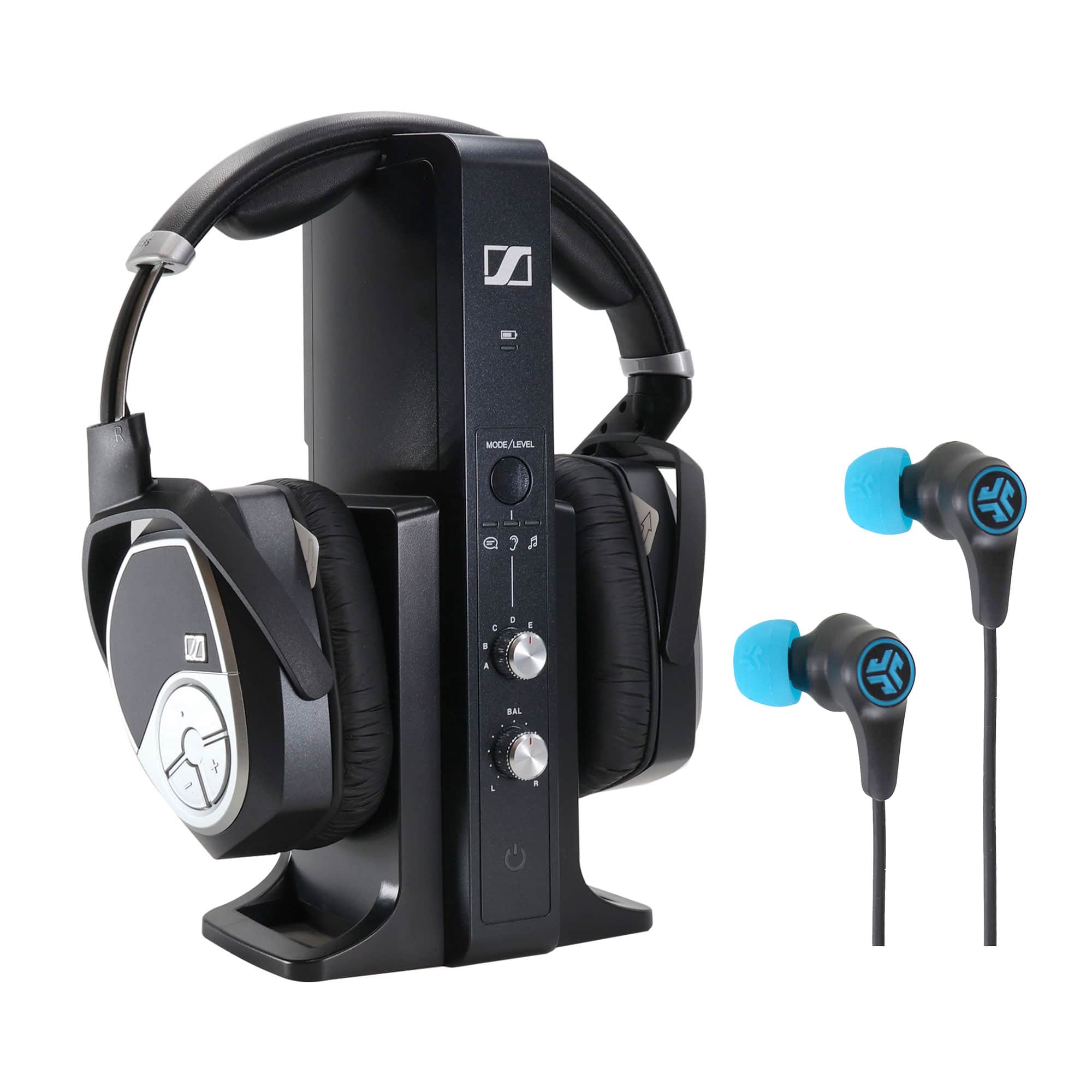
When you first unbox the RS 195, the build quality immediately communicates that this is a premium product. The headphones have substantial weight to them—not heavy enough to be uncomfortable, but enough to feel durable. The matte black finish resists fingerprints well, and the materials feel like they’ll withstand years of daily use.
The rotating ear cups are generously padded with memory foam and covered in soft protein leather. I wore these for several 4-hour movie marathons and experienced minimal ear fatigue. However, the design does feel somewhat dated compared to modern wireless headphones. They’re bulkier and less sleek than what you might be used to from contemporary brands.
The charging dock transmitter is both a blessing and a curse. It keeps your headphones organized and charged, but it’s not exactly discreet. You’ll need to dedicate a permanent spot near your TV for this relatively large base station. The dock has a satisfying magnetic connection that makes docking effortless, but it does take up valuable real estate on your media console.
Performance in Real Use
Where the RS 195 truly excels is in audio performance, particularly for its intended purpose. The hearing enhancement modes are more than just marketing fluff. The “Speech” mode genuinely makes dialogue clearer without making background music or effects sound unnatural. I tested this with several Netflix shows where I previously struggled with mumbled dialogue, and the difference was noticeable.
The wireless range is impressive—I could walk from my basement home theater to my second-floor bedroom without any audio dropouts. This makes them perfect for moving around the house while continuing to listen to your program. The audio quality remains consistent throughout the range, with no degradation even at maximum distance.
Latency is virtually nonexistent, which is crucial for TV and movie watching. There’s no lip-sync issues that plague many Bluetooth solutions. However, this comes with a trade-off: the dedicated RF connection means you can’t easily pair these with your phone or other Bluetooth devices.
Battery life consistently exceeded the advertised 18 hours in my testing. I used them for three days of evening viewing (about 5-6 hours per day) before needing to recharge. The quick charge feature provides 3 hours of use from just a 15-minute charge, which is convenient if you forget to dock them.
Ease of Use
Setup is straightforward if you’re comfortable with basic audio connections. The optical cable provides the best quality, but the 3.5mm analog option works well for older TVs. The transmitter automatically pairs with the headphones, so there’s no complicated Bluetooth pairing process.
The controls are intuitive but take some getting used to. The right ear cup houses the power switch and volume control, while the left has the hearing mode selector. After a day or two, the controls become second nature. The included JLab earbuds in this bundle are a nice bonus for gaming or mobile use, though they’re clearly a step down in audio quality from the Sennheisers.
One limitation I discovered: The system doesn’t automatically switch between audio sources. If you have multiple devices connected to your TV, you’ll need to ensure your TV’s audio output is correctly configured for the headphones.
Durability & Reliability
After several weeks of testing, the RS 195 has proven completely reliable. The build quality suggests these should last for years with proper care. The battery shows no signs of degradation, and the connection remains rock-solid.
The included carrying case for the JLab earbuds is a thoughtful addition, but the main headphones themselves are strictly for home use. They don’t fold or collapse for travel, reinforcing their purpose as a dedicated home entertainment solution.
Pros & Cons
Pros:
- Exceptional audio clarity, especially for dialogue
- Genuinely useful hearing enhancement modes
- Impressive wireless range with stable connection
- Comfortable for extended listening sessions
- Long battery life with convenient docking
- No noticeable latency for TV and movies
Cons:
- Bulky, dated design compared to modern headphones
- No Bluetooth connectivity for versatility
- Charging dock requires significant space
- Premium price point may not justify for casual users
- Not suitable for gaming due to audio delay
Comparison & Alternatives
Cheaper Alternative: Avantree HT5009
The Avantree HT5009 offers similar RF wireless technology at about half the price of the RS 195. In my testing, the Avantree provides good basic functionality but falls short in audio quality and comfort. The hearing enhancement features are less sophisticated, and the build quality feels more plasticky. However, for budget-conscious users who primarily need basic wireless TV audio, the HT5009 represents solid value.
Choose Avantree if: You’re on a tight budget and prioritize basic functionality over premium audio quality.
Premium Alternative: Sennheiser RS 195 vs. Bose TV Speaker
While not a direct headphone comparison, the Bose TV Speaker represents a different approach to the same problem. Instead of headphones, it’s a soundbar designed specifically for dialogue clarity. The Bose solution allows multiple people to enjoy enhanced audio without headphones, but it lacks the personalization and private listening aspect.
Choose Bose TV Speaker if: You watch TV with others and want to enhance audio for everyone in the room rather than just yourself.
Buying Guide / Who Should Buy
Best for Beginners
If you’re new to wireless TV headphones, the RS 195 is actually quite beginner-friendly. The setup is straightforward, and the automatic pairing eliminates technical complexity. The hearing enhancement modes are easy to access and make a noticeable difference without requiring audio expertise.
Best for Professionals
Audiophiles and home theater enthusiasts will appreciate the optical digital connection and the precise audio tuning. The ability to fine-tune the sound profile for different content types makes these suitable for critical listening applications.
Not Recommended For
Avoid the RS 195 if: You need headphones for gaming (latency, while minimal, may be noticeable for competitive gaming), want Bluetooth connectivity for multiple devices, or prefer a sleek, modern design for portable use.
FAQ
How do the hearing enhancement modes actually work?
The modes use DSP (digital signal processing) to boost specific frequency ranges. The speech mode emphasizes the 1-4 kHz range where most dialogue occurs, while the music mode provides a more balanced enhancement across frequencies.
Can I use these with my hearing aids?
While not specifically designed for hearing aid compatibility, many users find they can use these instead of hearing aids for TV watching. However, consult with your audiologist for specific recommendations.
Is the optical connection really better than 3.5mm?
In practice, yes. The optical connection provides a digital signal that’s less susceptible to interference and electrical noise. The difference is noticeable in quieter scenes or with higher-quality source material.
How’s the customer support experience?
Sennheiser provides solid warranty support, but their consumer division has become less responsive in recent years compared to their professional audio support.
Are these worth $300?
If clear dialogue and whole-home wireless coverage are priorities, yes. For casual users who only need basic wireless headphones, there are more affordable options that may suffice.