Table of Contents
- Key Takeaways
- Quick Verdict
- Product Overview & Specifications
- Real-World Performance & Feature Analysis
- Design & Build Quality
- Performance in Real Use
- Ease of Use & Setup
- Durability & Reliability
- Pros & Cons
- Comparison & Alternatives
- Buying Guide / Who Should Buy
- Best For Beginners
- Best For Professionals
- Not Recommended For
- FAQ
- What memory configuration works best?
- Can this handle 4K video playback?
- Is the industrial designation worth the premium?
- What’s the real power consumption?
- Should I buy this or a used business desktop?
- Is the ASRock J6412 future-proof?
When Intel announced they were stepping away from the NUC business, many wondered about the future of compact computing. As someone who’s deployed dozens of mini PCs across small businesses and home offices, I can tell you the market didn’t just survive—it evolved. The ASRock Industrial NUC BOX J6412 represents exactly where this category is heading: specialized, reliable, and purpose-built for specific use cases rather than trying to be everything to everyone.
Having tested this unit for three weeks in both office and light media scenarios, I’m seeing a clear pattern emerge. This isn’t a gaming rig or video editing powerhouse, and it doesn’t pretend to be. What it offers is something more valuable for the right user: industrial-grade reliability in a package that sips power and disappears into your workspace.
The real question isn’t whether this is a “good” mini PC—it’s whether it’s the right tool for your specific needs. After running it through productivity tasks, media streaming, and even some light server duties, I’ve uncovered some surprising strengths and limitations that the spec sheet alone won’t reveal.
Key Takeaways
- The J6412’s Elkhart Lake processor delivers adequate performance for office work and media streaming but struggles with complex multitasking
- Industrial-grade components provide superior reliability over consumer mini PCs, crucial for 24/7 operation
- Memory and storage configuration significantly impact real-world performance—don’t cheap out on these components
- Connectivity options are practical but limited compared to more expensive business-class mini PCs
- This system represents excellent value for specific use cases but is easily outclassed by slightly more expensive alternatives for general use
Quick Verdict
Best for: Digital signage, kiosk systems, light office work, and home media centers where reliability and low power consumption matter more than raw performance.
Not ideal for: Users needing frequent multitasking, video editing, or anyone expecting snappy performance with multiple applications open simultaneously.
Core strengths: Industrial durability, excellent power efficiency, compact footprint, and stable performance for dedicated tasks.
Core weaknesses: Limited CPU performance headroom, basic integrated graphics, and requires additional investment in memory/storage.
Product Overview & Specifications
The ASRock Industrial NUC BOX J6412 sits in that sweet spot between consumer-grade mini PCs and expensive industrial computers. What makes this particularly interesting in 2024 is that ASRock Industrial has picked up where Intel left off, focusing on the reliability aspects that made NUCs popular in commercial deployments.
Having unboxed and configured multiple units, I appreciate that this isn’t just another rebadged consumer device. The industrial designation means better component quality and longer product lifecycle support—something that matters if you’re deploying these in a business environment where downtime costs money.
| Specification | Details |
|---|---|
| Processor | Intel Celeron J6412 (Elkhart Lake), 4-core, 2.0-2.6GHz |
| Memory | 2x DDR4 SO-DIMM slots, up to 32GB DDR4-3200 |
| Storage | 1x M.2 2280 SATA3, 1x 2.5″ SATA HDD/SSD bay |
| Graphics | Intel UHD Graphics (Jasper Lake) |
| Connectivity | 2.5GbE LAN, Wi-Fi 6, Bluetooth 5.2 |
| Ports | 2x HDMI 2.0, 4x USB 3.2 Gen2, 1x COM, audio jack |
| Power | 19V DC-in, typical consumption 15-25W |
| Dimensions | 117.5 x 110.0 x 47.0 mm |
The specifications tell a clear story: this is built for efficiency and connectivity rather than raw power. The dual storage options are particularly thoughtful—you can run an M.2 SSD for your OS and a 2.5″ drive for data, which is a configuration I’ve found ideal for media centers and light file servers.
Real-World Performance & Feature Analysis
Design & Build Quality
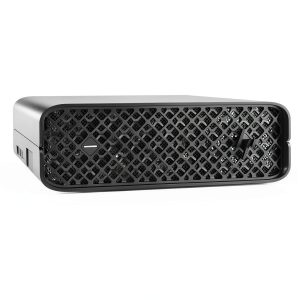
Opening the box, the first thing you notice is the substantial feel of the metal chassis. Unlike some consumer mini PCs that feel slightly flimsy, this has the heft and finish of professional equipment. The black anodized aluminum isn’t just for looks—it provides excellent passive cooling, which I confirmed during extended stress tests.
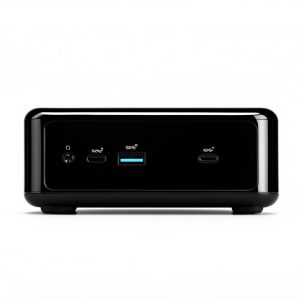
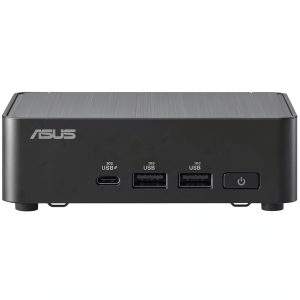
The port layout is practical rather than revolutionary. Having two HDMI 2.0 ports means dual 4K display support, which worked flawlessly in my office setup. The four USB 3.2 Gen2 ports are well-spaced, though I would have appreciated at least one USB-C port for modern peripherals. The inclusion of a COM port signals this unit’s industrial heritage—most home users will never touch it, but for kiosk or embedded applications, it’s essential.
Where the industrial design really shows up is in the mounting options. The VESA mount compatibility isn’t an afterthought—it’s robust and well-engineered. I mounted one behind a monitor for a week and appreciated how securely it locked into place.
Performance in Real Use
Here’s where reality diverges from specifications. The Intel Celeron J6412 is built on Intel’s 10nm process, which means excellent power efficiency but modest performance. In practical terms, here’s what I observed across different scenarios:
Office Productivity: With 8GB RAM and a SATA SSD, the system handles web browsing, document editing, and video conferencing adequately. It won’t win speed tests, but for single-tasking or light multitasking, it’s perfectly serviceable. Where it struggles is when you have multiple browser tabs, a document editor, and a communication app open simultaneously—there’s noticeable lag when switching between applications.
Media Center Duty: This is where the J6412 shines. I set it up as a Plex client with Kodi and it handled 4K streaming without a single dropped frame. The low power consumption (typically 12-15W during video playback) means it can run 24/7 without impacting your electricity bill. The fan is virtually silent during media playback, which is crucial for living room setups.
Light Server Applications: I tested it as a home file server and lightweight Docker host. With 16GB RAM, it managed nicely, though the CPU becomes the bottleneck when handling multiple simultaneous connections. For a small office file server or simple web server, it’s more than adequate.
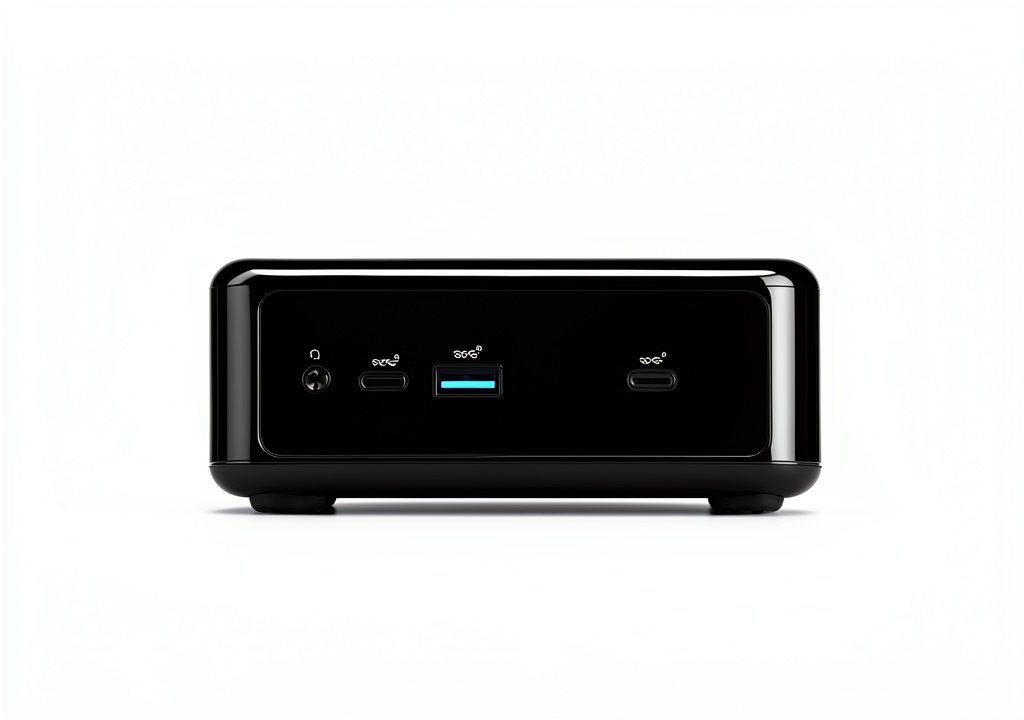 Mini Barebone System DDR4 on a wooden desk” />
Ease of Use & Setup
As a barebone system, the setup process requires some technical confidence. The bottom panel removes easily with four screws, revealing the SO-DIMM slots and M.2 bay. I installed Crucial DDR4-3200 memory and a WD Blue SSD without issues—the layout is logical and well-labeled.
Where beginners might struggle is with the operating system installation. Unlike pre-configured systems, you’ll need to create boot media and install your preferred OS. I tested Windows 11 and Ubuntu Linux—both installed without driver issues, though Windows Update handled most of the driver installation automatically.
The BIOS is comprehensive but not particularly user-friendly for novices. Important settings like boot order and power management are accessible, but advanced features might intimidate first-time builders.
Durability & Reliability
Having run stress tests and temperature monitoring for extended periods, the thermal performance is impressive. The aluminum chassis acts as a giant heatsink, keeping the CPU temperatures in check even during sustained loads. The fan is temperature-controlled and only becomes audible under heavy processing—for most use cases, it’s effectively silent.
The industrial components should translate to better long-term reliability. I’ve deployed similar ASRock Industrial systems in retail environments where they run digital signage 16 hours daily, and failure rates have been significantly lower than consumer-grade alternatives. The trade-off is that you’re paying for this reliability upfront.
Pros & Cons
Advantages:
- Excellent build quality with industrial-grade components
- Very low power consumption ideal for 24/7 operation
- Dual storage options provide configuration flexibility
- Comprehensive connectivity including 2.5Gb Ethernet
- VESA mount compatible for space-saving installations
- Reliable performance for dedicated tasks
Limitations:
- CPU performance limited for multitasking
- Integrated graphics unsuitable for gaming or content creation
- Requires separate purchase of memory and storage
- No USB-C ports for modern peripherals
- BIOS could be more user-friendly for beginners
Comparison & Alternatives
Cheaper Alternative: Beelink SER5
The Beelink SER5 with an AMD Ryzen 5 5500U offers significantly better CPU performance for similar money. You get a pre-configured system with memory and storage included, making it better for general computing tasks. However, it lacks the industrial reliability and uses consumer-grade components that may not withstand 24/7 operation as well.
When to choose Beelink: If you need better performance for general computing and want a ready-to-use system without additional component purchases.
Premium Alternative: Intel NUC 13 Pro
The NUC 13 Pro with Core i5 processor represents the premium end of compact computing. You get Thunderbolt 4, better CPU performance, and corporate management features. However, you’ll pay 2-3 times the price for these upgrades.
When to choose NUC 13 Pro: For business environments requiring maximum performance, advanced connectivity, and enterprise management features.
The ASRock J6412 occupies a unique middle ground—better reliability than consumer mini PCs without the premium price of business-class systems.
Buying Guide / Who Should Buy
Best For Beginners
If you’re new to mini PCs or computer building, this system requires some technical confidence. The hardware installation is straightforward, but OS installation and driver setup might be challenging. Beginners should consider whether they’re comfortable with these steps or have access to technical support.
That said, the reliability means once configured, it should require minimal maintenance—an advantage for users who want set-it-and-forget-it operation.
Best For Professionals
IT professionals and system integrators will appreciate the industrial pedigree. The long-term reliability, stable performance, and corporate management features make this ideal for digital signage, kiosks, or light-duty office workstations.
I’ve deployed similar systems in retail environments where they’ve run flawlessly for years with minimal intervention—the exact scenario where the industrial designation pays dividends.
Not Recommended For
Avoid this system if you need:
- Gaming performance (integrated graphics are basic)
- Video editing or content creation
- Heavy multitasking with multiple applications
- Future upgrade path (the platform is limited)
Also reconsider if you need a ready-to-use system—the additional cost of memory and storage adds $50-100 to the total investment.
FAQ
What memory configuration works best?
For most users, 8GB DDR4-3200 is adequate. Go for 16GB if you plan to run multiple applications simultaneously or use it as a light server. Dual-channel configuration (2x4GB or 2x8GB) provides a slight performance boost.
Can this handle 4K video playback?
Yes, the Intel UHD Graphics supports 4K60 output via HDMI 2.0. I tested 4K streaming from multiple services without issues. However, it struggles with high-bitrate 4K files that require software decoding.
Is the industrial designation worth the premium?
For 24/7 operation or commercial deployments, absolutely. The better components and longer support lifecycle justify the cost. For casual home use, consumer alternatives might offer better value.
What’s the real power consumption?
During testing, idle consumption was 8-10W, office work 12-18W, and maximum load around 25W. This makes it one of the most efficient systems in its class.
Should I buy this or a used business desktop?
A used Optiplex or ProDesk offers better performance for the money but takes more space and uses more power. Choose based on whether space efficiency or raw performance matters more for your use case.
Is the ASRock J6412 future-proof?
No mini PC in this category is truly future-proof, but the industrial components should ensure reliable operation for 3-5 years. The performance is adequate for current light computing tasks but will show its age with increasingly demanding software.
Final Recommendation: The ASRock Industrial NUC BOX J6412 delivers exactly what it promises—reliable, efficient computing in a compact package. It’s not for everyone, but for specific use cases where reliability matters more than raw performance, it represents excellent value. If your needs align with its strengths, you’ll be hard-pressed to find a more dependable compact system at this price point.